
Scissor lifts are a classification of manlift often found in construction and facility maintenance applications designed to elevate workers and their tools to working heights ranging from 7.85 m to 18.15 m.
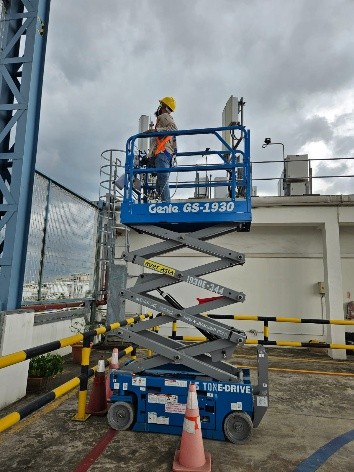
Scissor lifts, which are typically self-propelled machines, get their name from their lifting mechanism design — a stack of crossed tubes that work in a scissor-like fashion when the platform is raised and lowered. Today, scissor lifts are one of the most common equipment found in rental fleets and on jobsites. One of the most popular electric scissor lift is the Genie® GS™-1930 model.
Scissor lifts are further classified as either slab scissors or rough terrain scissors, based on the application for which they are designed. Slab scissors are compact machines with solid non-marking tires, intended to be operated on concrete slab type surfaces. Genie slab scissors can access jobsites through single or double doors, depending on the model, enabling them to access restricted access applications and jobsites.
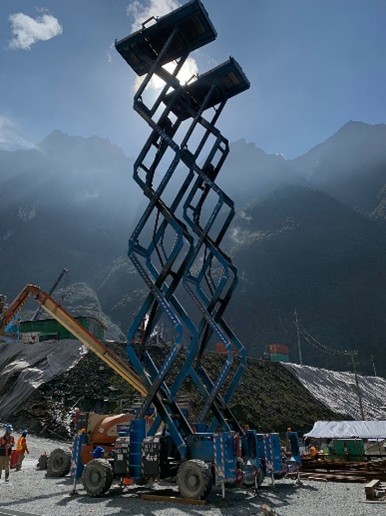
On the other hand, rough terrain scissors are typically engine powered machines equipped with air or foam filled rough terrain lug type tires. These scissors get their name from the surfaces they are designed to travel across, as Genie RT scissors are engineered to navigate rough or unimproved terrain with up to 45% gradeability.
Offering a dozen of models, Genie® slab and rough terrain scissor lifts offer the lift capacity and platform space to meet different work requirements.
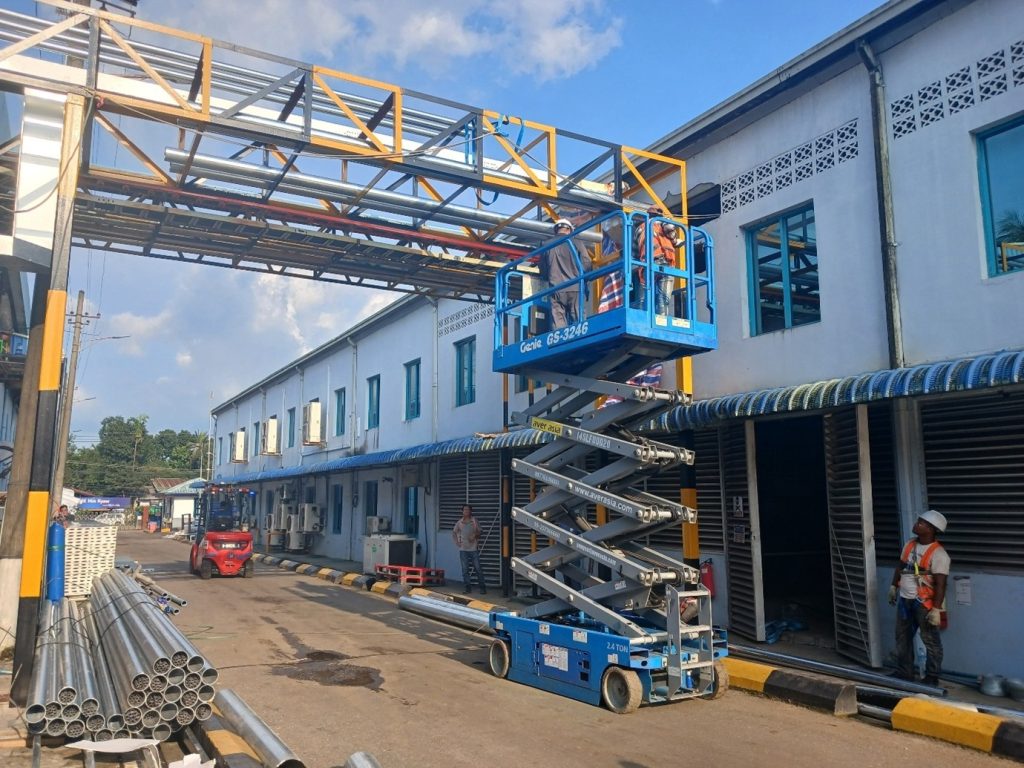
An electric model is good indoors, where low noise and low
emissions are important. Rough-terrain models are best when the lift needs to
travel over uneven ground in the work area. The outrigger option allows a
machine to be levelled on a slope. Scissor lifts offer users plenty of
workspace and mobility. It is important to understand scissor lifts and their
uses to make the best recommendation to meet customers’ jobsite needs.